Blue Origin Blows Up. Rocket Science is Hard. But is that a bad thing?
· Current Events · 5 min read
By Victor Chen
The News
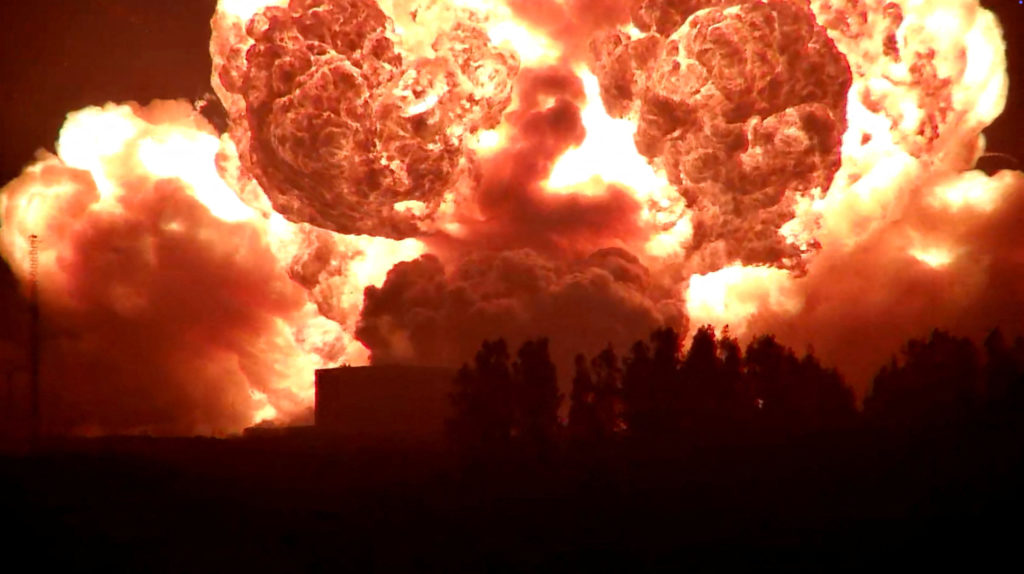
On May 28, Blue Origin rocket New Glenn blew up during a hotfire test. A fireball destroyed the launchpad at the Cape Canaveral Space Force Station as the rocket started its planned testing. Glenn's seven methane-fueled BE-4 first stage engines at Cape Canaveral Space Force Station. The explosion was believed to be the most powerful rocket explosion since the Soviet Union’s N1 moon rocket was destroyed during its second launch attempt. The engine test was meant to set up New Glenn’s fourth flight scheduled on June 4, which was supposed to deploy 48 satellites for Amazon. No people nor satellites were hurt or damaged during the explosion as confirmed by Jeff Bezos personally through a post on X later that day. The explosion will significantly hurt Blue Origin's launch plans, as the company only has the single pad which blew up, whereas rival SpaceX has two operational launch pads. The explosion marked the first on-pad explosion since the SpaceX Falcon 9 blew up in 2016, which caused the model to stay grounded for over 3 months and the pad to be repaired for over a year.
Context
New Glenn has seen incredible progress since its first launch in January of last year, during which it reached orbit but failed to recover its booster stage. Subsequent missions saw it carry NASA Mars probes and successfully land its reusable booster twice. However, failures followed soon after as a thrust problem during its third mission left an AST SpaceMobile satellite it was carrying in the wrong orbit, causing the FAA to investigate and ground the ship. The investigation and repairs concluded days before the explosion on May 22, as the FAA discovered a cryogenic leak that froze hydraulic lines that caused the thrust anomaly. Corrective actions were mandated by the FAA before New Glenn was allowed to fly again. The new explosion has not triggered a repeat FAA intervention as it was deemed to be outside the scope of FAA licensed activities by an FAA spokesman. Blue Origin suspended its suborbital rocket, New Shepard, last year to focus on New Glenn and plans to reach the moon, so the entire company's fleet is grounded for the foreseeable future as a result of the setback.
Immediate Cause
The cause of the explosion remains unclear, as no information has been released to the public so far. However, from expert analysis, the failure appears to have originated near the base of the rocket’s first stage. The engines, each producing around 550,000 pounds of thrust, appeared to ignite normally before a flash erupted at the base. The specific engine, the BE-4, has a history of issues, as on June 30, 2023, the same model exploded 10 seconds into testing. However, the CEO of Blue Origin has made statements implying the root cause is not engine related, as he promised to resume flights by the end of the year. If true, this signals that there is no major fundamental design flaw with the engine, which would have taken longer to correct and change.
Effect
Blue Origin CEO Dave Limp immediately announced that key launch infrastructure survived the explosion, and the damaged support tower can be repaired rather than needing to be fully rebuilt. The company made commitments to fly again by the end of the year, committing to its motto, “Gradatim Ferociter”, which is latin meaning “step by step, ferociously”. By comparison to these ambitious goals, SpaceX spent over a year repairing its damaged launchpad following the Falcon 9 explosion in 2016, which is well over the 7 month timespan Blue Origin has given itself. However, it is key to note that the infrastructure and knowledge developments over the past decade may make the recovery mission easier this time around.
AMAZON Low Earth Orbit (LEO) Broadband Constellation
The New Glenn is key for Amazon’s LEO broadband constellation project, as it was supposed to carry the satellites to orbit through 24 launches, but the entire project is now suspended with no clear date of resumption. The Federal Communications Commission (FCC) has ordered Amazon to have over 1600 satellite operations by July 2026, but Amazon requested an extension to 2028, which was approved by the FCC by issuing a conditional waiver to free Amazon of the obligations. The FCC imposed conditions that will demote the priority of satellites after the original deadline, until the project is fully set with the original mark accomplished. Amazon has cited a shortage of available rockets as a reason for being unable to immediately send the satellites into orbits.
NASA Moon Base 1
Blue Moon Mark 1 (MK1) was scheduled to launch in fall 2026 to deliver the building blocks for NASA’s Moon Base 1. The mission is now likely delayed, with the development and qualification timeline for the crew-capable Blue Moon MK2 missions timeline pushed back as well. New Glenn is a key bottleneck for the mission. If it stays out of service, Artemis 3 schedule will have to be delayed, unless NASA decides to move ahead with sole dependence on SpaceX Starship, which may pose further risk in the future as it is currently grounded with problems of its own. NASA Administrator Jared Isaacman said the agency is seeking an alternative launcher for Blue Origin’s Moon landers to keep the Artemis timeline on track.
Market Impact
The explosion is likely to have significant impacts on space companies that rely on Blue Origin for launching hardware into orbit. AST SpaceMobile has the launch of its commercial satellite constellation expected to be postponed from Q4 2026 to Q1 2027. AST SpaceMobile fell as much as 18% in early trading. Rocket Lab slid more than 6%, Planet Labs and Intuitive Machines each fell more than 5%, as did Voyager Technologies. The Procure Space ETF (UFO) was on pace for its worst session of the year. Amazon saw its stock decline by 1.1% following the explosion, with analysts suggesting this poses risks related to scheduling and market perception, potentially delaying Amazon's constellation rollout and commercial services.
The more important question was whether the market’s reaction was justified in proportion to the severity of the events that occurred. For most major conglomerates with diversified revenue streams, the explosion will have minimal long term impact. For example, Amazon makes a majority of its revenue from AWS, which is not affected by the explosion. Citi, Jefferies, and Truist Financial all reiterated Buy or equivalent ratings on the stock over the past week, with fresh price targets ranging up to $320.
Another important actor to monitor is Blue Origin rivals, SpaceX, which will IPO on June 12.
SpaceX will begin trading on Nasdaq under the ticker SPCX, targeting a $1.75 trillion valuation. The Blue Origin explosion illustrates SpaceX's industry leadership. According to SpaceX's recent S-1 filing, SpaceX rockets launch 80% of the world's mass into orbit. After the explosion, NASA's entire moon exploration program depends on SpaceX for now as Musk eyes the blockbuster IPO.
Rocket science is hard, but accidents happen. Blue Origin's New Glenn is not the first rocket to explode, and, bold prediction, it will not be the last. Explosions like this remind the market to value space stocks keenly, with consideration for potential risks that exist in a high stakes industry like space. In a time when you can see rockets launching nearly every day, this incident serves as a reminder of how hard space exploration is and that successful missions are not something to be taken for granted. As the markets start to price in accidents, valuations often drift closer to their actual values.
So in short, the accident serves as a necessary reminder to the public, as well as markets, that rocket science is hard. While the explosion is a setback technologically, it is a needed warning sign for the business side of new technologies that inherently possess high risk. By having a headlining explosion that brings the risks back to mainstream attention, it helps the market learn to price in risk and not ride on hype, generating clearer valuations that represent the true value of a business all factors considered.