Chokepoint: Specialty Isotopes
· The Stack · 5 min read
By Victor Chen
Chokepoint: Specialty Isotopes
The Layer
As with most advanced technologies, the raw materials behind the quantum computing industry are rare, expensive, and a potential bottleneck at the very top of the quantum supply chain. Raw elements like helium-3 for cooling; silicon-28 for spin qubits; and niobium for current carrying are crucial to the quantum process. The control systems and computers discussed in prior weeks are downstream customers of everything here. Unlike those systems, the physical scarcity of materials, not business valuation or engineering ability, represent the key challenge in this chokepoint of the supply chain.
What It Is
Helium-3 is a non-radioactive isotope of helium (2 protons, 1 neutron) and is used as the working fluid in a dilution refrigerator. He-3 is mixed with He-4, which separates into a He-3-rich phase and a He-3-dilute phase. Continuously forcing He-3 atoms across that boundary absorbs heat. Currently, there is no synthetic substitute to this process. Natural silicon is 4.7% silicon-29, the only Si isotope with a nuclear spin, which decoheres qubits. Niobium superconducts and is used for transmon circuits, resonators, and superconducting-RF cavities.
Why It Matters
Virtually all supply of Helium-3 comes from radioactive decay of tritium in nuclear-weapons stockpiles, primarily from the US. Currently, Russian supply has effectively been excluded from Western markets since 2022 after its invasion of Ukraine. As such, there is a structural deficit as 22,000–30,000 L/yr is produced versus 40,000–60,000 L/yr in demand. As quantum scales, the gap will only grow worse. At $1,900–2,600/L at bulk quantities, Helium-3 is extremely expensive to produce. Purification adds a further $10,000/L. Demand scales with qubit count as more qubits means more signal paths which requires both higher Helium-3 consumption as well as cooler size. Comparatively, Silicon-28 is small but non-substitutable for silicon spin quantum computers. The global quantum-grade market is less than 50 kg/yr. There are few enrichment facilities but they are mandatory for silicon-spin qubits which is currently led by Intel among public names. Niobium is essential but supply is not an issue for quantum usage.
The Basket
Silicon-28
- ASP Isotopes (ASPI): The initial batch of enriched Si-28 samples shipped Aug 2025, with commercial shipments now targeted for the same period in 2026. The company has a broader portfolio of important materials including ytterbium-176 and carbon-14.
- Silex Systems (ASX): Laser-based enrichment (SILEX process) commissioned at Sydney "Q-Si" plant. The first Si-28 samples are expected in Q1 2027; initial offtake to Silicon Quantum Computing.
- Government: Department of Energy announced 99.9999% Si-28 (Si-29 <1 ppm) in July 2026.
Helium-3
- Government: US Department of Energy auctions them off via NIDC auctions.
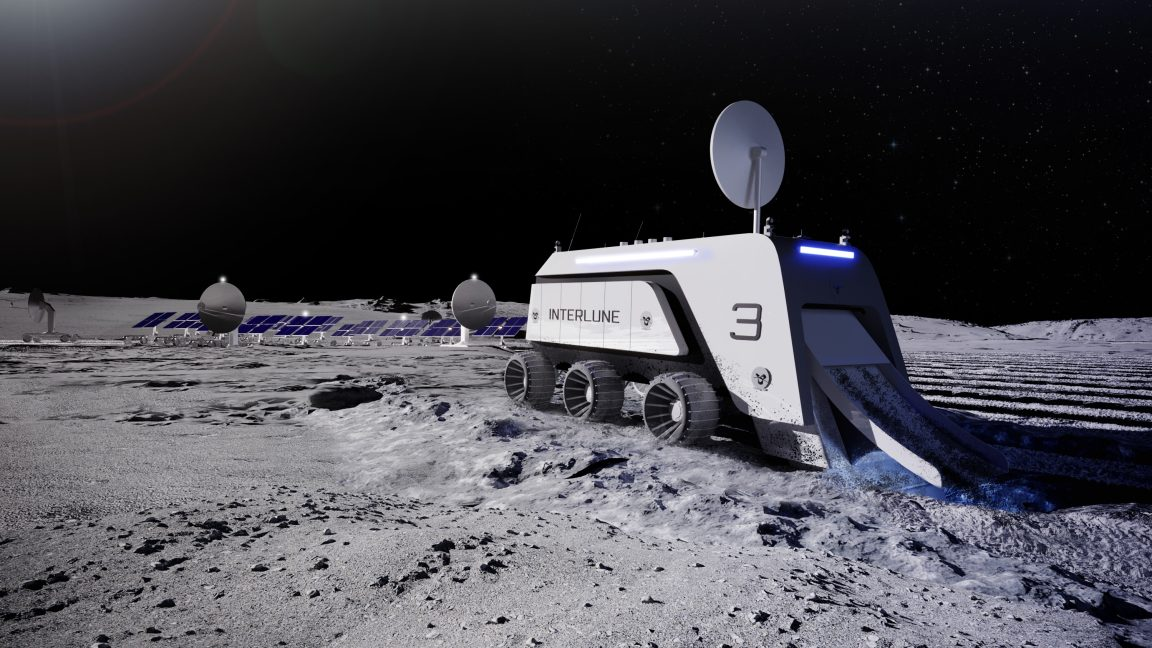
- Interlune: Developing lunar He-3 extraction and terrestrial separation.
Niobium
- ATI Inc (ATI): The sole US producer of high-purity Nb sheet.
- CBMM: Controls 77% of world mined niobium.
- Ningxia OTIC: Produces SRF-grade Nb sheet.
What to Watch
He-3 pricing in bulk and supply deficit is key to watch, as it is the material every superconducting and spin machine must rely on, while other modalities depend on this layer to varying degrees. Interlune milestones of lunar deliveries under DOE is key. Substitution technologies developments such as Kiutra He-3-free ADR, Maybell reduced-He-3 architectures could relieve demand growth as quantum commercialization. ASP Isotopes commercial Si-28 shipments are key in comparison its execution versus timeline, along with potential disclosure of capacity, purity spec, or customers.
The Takeaway
While the baseline materials may not be a place for the market to profit, they are key to deciding the limitations of quantum. Different quantum methods have different reliances and differing levels of reliance on this layer of the supply chain, and for those with heavy reliance on an unstable product, there are bound to be issues that arise with future expansion and commercialization. The baseline costs for specialty isotopes, as well as supply movements, sets the cost floor and scaling ceiling for every superconducting/spin quantum computer. As with other parts of the vertical chain, partnerships, government announcements, and supply developments are key in deciding whether some quantum methods with heavy mineral reliance in the future can survive, and the pricing model of supply-restricted elements will heavily curtail potential if an alternative is not found.