South Korea Bets $590 Billion on AI. Will It Pay Off?
· Current Events · 5 min read
By Sean Zheng, Editor
The News
On June 29, the South Korean government unveiled a roughly ₩800 trillion ($576–590 billion) industrial investment commitment, led by Samsung Electronics and SK Hynix, representing one of the largest industrial commitments in modern history to expand semiconductor manufacturing and AI infrastructure.
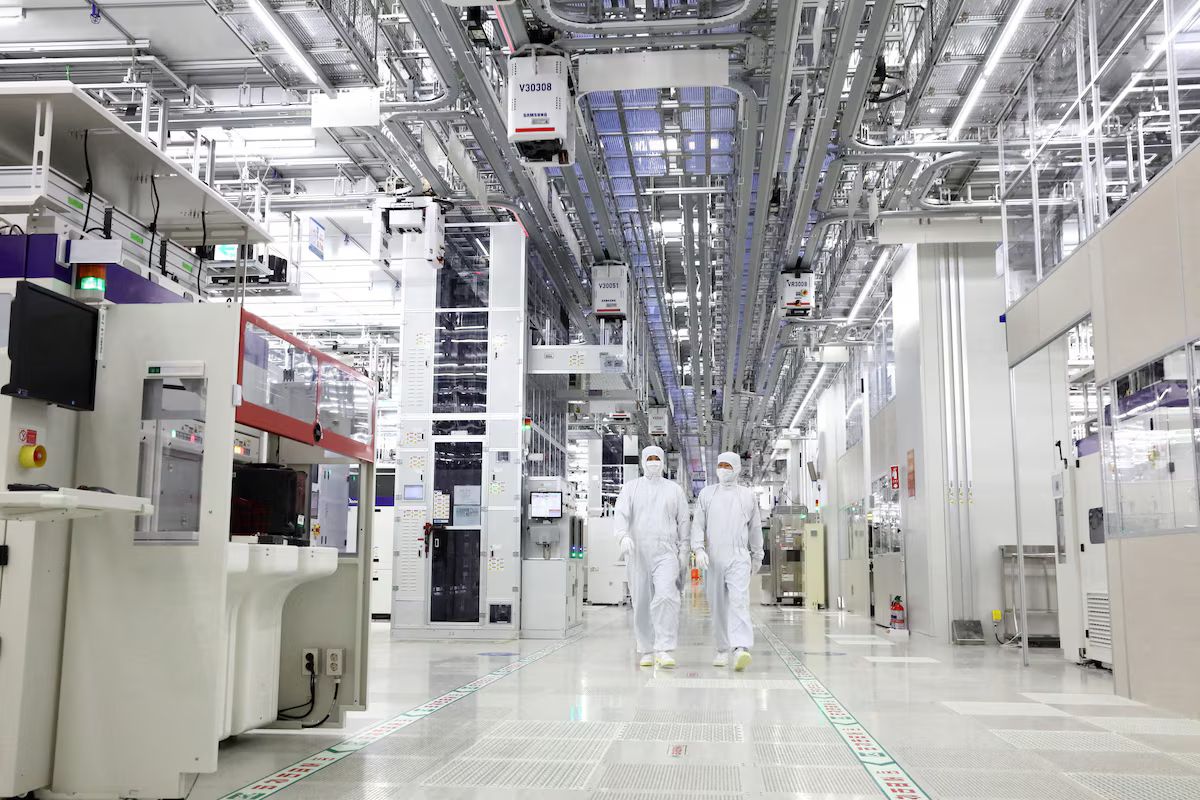
Samsung and SK Hynix will each construct two advanced semiconductor fabrication plants in South Korea's southwest region, expanding production beyond their traditional manufacturing centers around Seoul. The goal is to develop an integrated semiconductor ecosystem, including manufacturing facilities, advanced packaging operations, suppliers, infrastructure, and research capabilities, all designed to support the next generation of AI computing.
This announcement extends beyond semiconductors, including additional investments in AI data centers and physical AI technologies. This reflects a national strategy to position South Korea at the center of global AI infrastructure. Government officials view the project as crucial for maintaining South Korea's technological leadership and spreading industrial growth beyond the capital region.
The investment comes during a period of exceptionally strong demand for AI hardware, particularly memory chips like High Bandwidth Memory, which have become critical for AI accelerators designed by companies like NVIDIA.
Context
South Korea has become one of the world's most important participants in the AI infrastructure boom. It has established a dominant position in advanced memory manufacturing, with Samsung and SK Hynix remaining at the forefront.
This transformation has dramatically reshaped South Korea's semiconductor industry.
On June 22, SK Hynix surpassed Samsung Electronics to become South Korea's most valuable listed company. Subsequently, marking a notable turnaround for a business that once struggled under heavy debt. This milestone reflects investors’ growing belief that AI memory will remain one of the most valuable segments of the semiconductor market as hyperscalers continue expanding AI infrastructure worldwide.
Simultaneously, Samsung has sought to reinforce its position through large-scale domestic investment.
Before the official announcement, reports indicated that the company was preparing large-scale corporate investment programs spanning semiconductors, AI data centers, batteries, and related technologies.
The overarching context is an AI investment cycle unlike previous semiconductor expansions. With cloud providers, technology companies, and governments investing hundreds of billions of dollars into AI infrastructure, creating persistent shortages of advanced memory chips.
South Korea's export performance has increasingly benefited from this trend, with Samsung and SK Hynix becoming central suppliers to the global expansion of AI data centers.
The new investment reflects expectations that AI infrastructure will remain a long-term industrial priority rather than a response to a temporary surge in demand. South Korea's announcement signals confidence that AI-driven demand will remain strong for years to come, requiring a significant expansion of domestic production capacity.
Immediate Cause
Global AI infrastructure spending is accelerating, and advanced memory chips are crucial to support this expansion. Companies are racing to deploy powerful AI systems, causing demand for High Bandwidth Memory to outpace supply.
This creates strong pricing conditions, with manufacturers expanding production aggressively. Samsung and SK Hynix are making one of the industry's largest bets on the assumption that AI investment will continue into the next decade.
Additionally, the timing reflects growing confidence among companies and investors. SK Hynix launched a multibillion-dollar U.S listing to finance expansion, and institutional demand for AI-related semiconductor investments remains strong.
This announcement reflects a shift in industrial policy. South Korea's government is coordinating investments between industry leaders and public institutions, rather than allowing companies to pursue independent semiconductor expansion. Officials view this project as a national effort to secure long-term competitiveness in semiconductors and AI. By combining public support and private capital, South Korea aims to strengthen semiconductor production, while encouraging economic development outside Seoul.
Simultaneously, these developments suggest that industry participants increasingly view the current AI boom as the beginning of a prolonged infrastructure cycle rather than a short-term surge in technology spending.
Effect
The announcement represents more than just a construction of new semiconductor fabrication plants. It's a signal that the country is moving toward a fully integrated AI manufacturing ecosystem, where chip production, advanced packaging research, and workforce development can occur simultaneously.
South Korea's government aims to create an environment capable of supporting future generations of AI hardware while strengthening the country's position in the global semiconductor supply chain.
One immediate effect will be a significant increase in domestic semiconductor manufacturing capacity. Samsung is investing around 400 trillion won in new facilities in Gwangju and expanding High Bandwidth Memory production in Cheonan and Onyang.
SK Hynix plans to build two more plants in the southwest to meet the growing demand for AI memory. While the government has committed to support the expansion through investments in electricity, water infrastructure, transportation, workforce development, and housing. The government recognizes that advanced semiconductor manufacturing requires significant support.
Additionally, the project has important implications for South Korea's economy. By locating new facilities outside Seoul, the government is trying to promote regional development and reduce pressure on existing industrial centers.
This investment will create a large number of skilled jobs and stimulate construction, equipment manufacturing, and other supporting industries. As new suppliers establish operations near the fabrication sites, the cluster could generate long-term economic activity that extends beyond the semiconductor sector.
Possibly the most significant effect is on the global AI supply chain. Shortages of advanced processors and limited High Bandwidth Memory availability have constrained AI development over the past two years. Expanding manufacturing capacity at Samsung and SK Hynix could alleviate a key bottleneck; cloud providers and AI developers would obtain more reliable supplies of advanced memory as data center investment continues.
However, the expansion is not without risk. Semiconductor manufacturing has experienced periods of aggressive investment, followed by oversupply and declining profitability.
This initiative assumes AI-related demand will keep growing over the coming decade. Should enterprise AI adoption or hyperscaler spending slow before these facilities reach full production, Samsung and SK Hynix could face excess capacity after committing hundreds of billions of dollars.
Market Impact
The immediate market implications are that Samsung electronics and SK Hynix are positioning themselves to remain at the center of global AI infrastructure for the coming decades. While NVIDIA continues to dominate AI accelerator design, Samsung and SK Hynix increasingly become leaders in one of the industry's most valuable technologies: advanced memory.
The announcement reinforces the idea that AI infrastructure spending remains in its early stages. Samsung Electronics, and SK Hynix, together with the South Korean government's commitment of roughly ₩800 trillion ($576–590 billion) to semiconductor manufacturing.
SK Hynix Chief Executive Kwak Noh-Jung recently warned that the global memory market could experience a severe supply shortage in 2027, with demand expected to outpace production well beyond 2030. UBS and Bank of America have similarly projected continued supply constraints driven by AI infrastructure investment.
In addition, the announcement strengthens the outlook for companies across the semiconductor supply chain. Samsung's expansion alone includes 400 trillion won for new fabrication facilities and 56 trillion won in High Bandwidth Memory. SK Hynix plans to invest more than 100 trillion won annually in South Korea over the next decade for semiconductors and AI infrastructure.
Rising investor confidence is now centered around the companies at the heart of making AI memory. SK Hynix is up by over 340% in the last 12 months and has just become the most valuable of all South Korean listed companies, with a total value of ₩2,080 trillion.
Compared with Samsung's value of 2,067 trillion won, Samsung is expected to report an approximately 20x increase in second-quarter operating profit, driven by AI-related demand that has just pushed average DRAM prices up 44% and NAND prices up 53%.
So in short, the market has largely viewed artificial intelligence through the lens of companies developing AI models and accelerators. South Korea's announcement suggests that the next phase of AI competition may instead be determined by the infrastructure supporting those technologies. A commitment of nearly ₩800 trillion reflects growing confidence that advanced memory will become significantly more valuable as AI infrastructure expands. The question for investors is no longer whether AI demand will continue growing, but whether that growth will be sufficient enough to justify the size of one of the most ambitious semiconductor expansion programs in history.